AI doesn't change your pattern. It amplifies it. The ambitious can now be so without a ceiling. Raising the bar no longer costs, and what doesn't cost goes unquestioned.
I say this from experience, because the pattern I'm talking about is my own. And a few weeks ago I caught myself right in the act.
Not with a client. With myself. I was working on a piece that objectively was fine. A year ago I would have called it done. But now I noticed something else: a new dissatisfaction. I could iterate more. I could do more. And I raised the bar on my own, without anyone asking me to.
It wasn't a bad decision. It was a decision made from where I was standing.
That dissatisfaction doesn't stay with one piece. It becomes a pattern. If I can do more, I start committing more. I accepted far more things than I could have sustained a few months earlier, trusting in my new capacity to produce thanks to AI. The internal phrase, when accepting, was always the same: I trust I'll be able to create it, I'll do it very well and with excellent quality.
Before, raising the bar like this had an immediate and visible cost: the body, the time, the wear. That cost was finite, and sometimes it was the very engine that pushed me to stop. AI removes it. Raising the bar no longer hurts in the moment. But the price doesn't disappear: it's collected later, and in two places I wasn't looking.
The first is exhaustion. It arrives later, when the commitments I accepted trusting in the lever leave me exhausted and delivering things of worse quality than I would have signed off on without it.
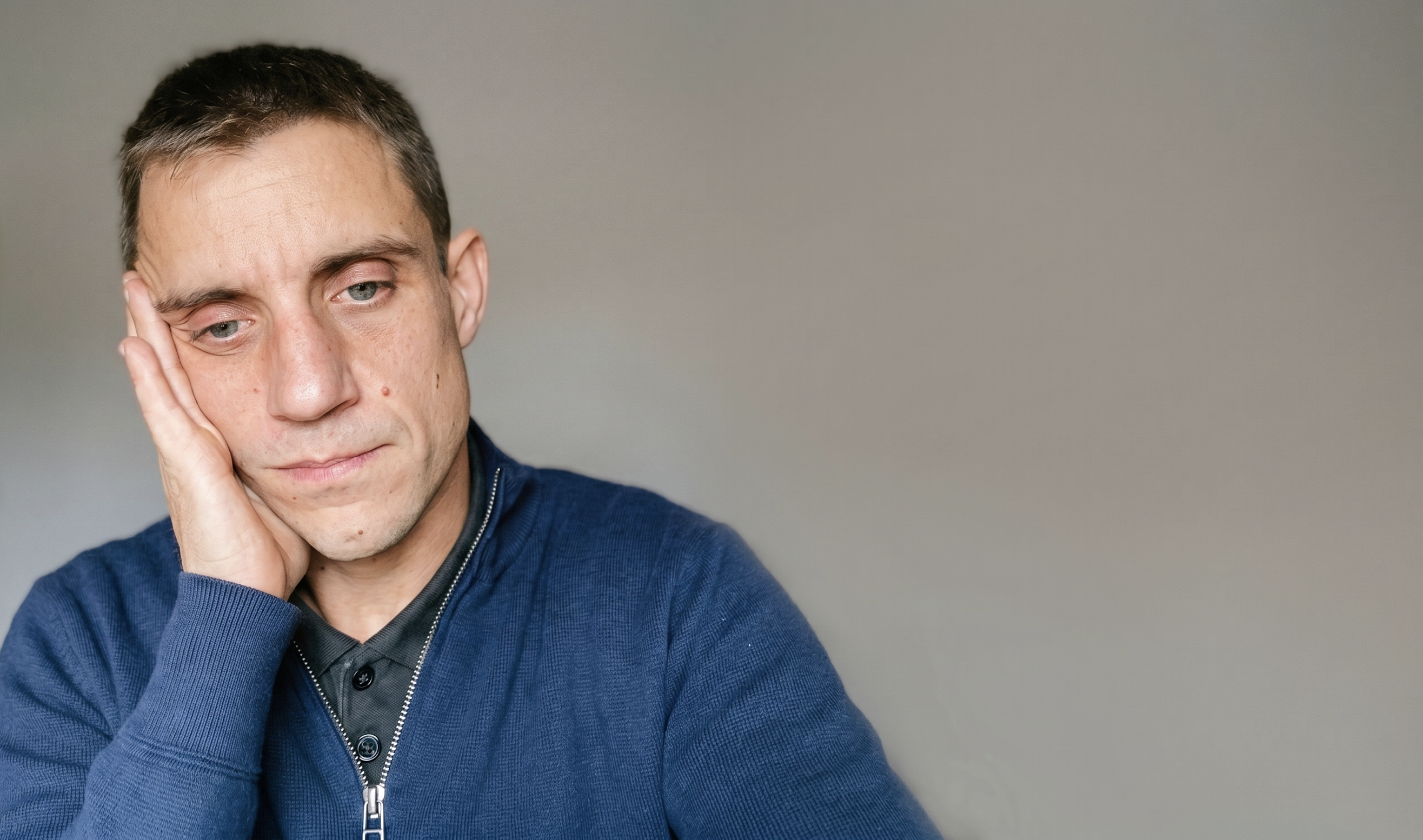
The second disturbs me more, because it's harder to name. When I look at what I produced this way, I realize that often it's not even what I had in mind. And the uncomfortable question appears: what I deliver, is it me, or am I refining outputs? I haven't savored the contents the same way anymore. I haven't thought through the design the way I used to. The tool promised me perfection and, along the way, took away the flavor.
Some time ago I said enough. Not to the tool, but to taking everything it gives me just because I can. AI can iterate to infinity, and many of those iterations are good. That's the problem: it doesn't stop because something is wrong, it stops when I decide. And past a certain point, what comes out stops being mine. That's why Covey's principle, begin with the end in mind, is more relevant than ever: if I'm clear about the ending before I start, I build the structure myself and let AI help me raise it, not drag me along—neither toward overcommitting, nor toward iterating until I lose myself.
I know how to ask this question of others. It's harder for me to ask it of myself.
So I leave it here, out loud, in case it resonates with anyone: in the last thing you designed, were you still clear about your end, or did you lose it iteration by iteration?
Did this resonate?
If this connects with something you're working on, let's talk.
30 minutes by video call. No commitment. You'll know if I can help and, if I can't, I'll tell you who can.
Book a conversation →