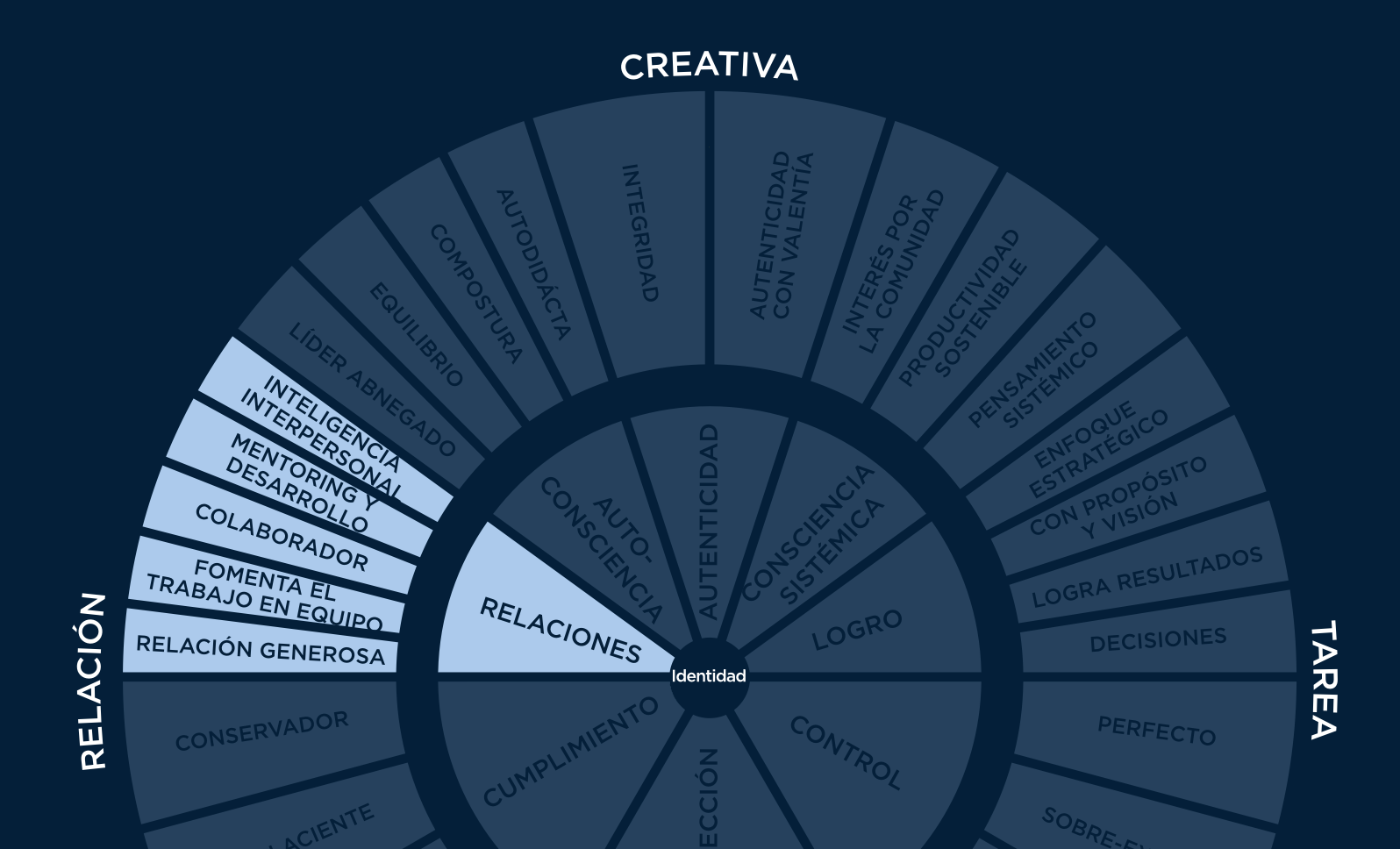
Leadership cannot be understood simply as individual capacity and brilliance. As incredible as it may seem, even today we still encounter leaders who see it that way and continue to resist viewing it for what it truly is: the capacity to orchestrate collective success.
What Does Fostering Teamwork Mean?
This dimension measures a leader's ability to promote high-performance teamwork, not only within their direct group, but throughout the entire organization and in all the teams they are part of. Leaders who have developed this capacity are leaders who do not seek to be the stars or have medals hung on them, but rather conceive success in terms of synergy and team spirit.
This is, then, a creative competency that releases energy and performance; we see this in the following key elements:
Capacity to leverage collective intelligence: When organizations grow in complexity (or their context does), the success and sustainability of the project depend on the ability to use everyone's intelligence, not just the leader's.
Tendency toward generating a positive climate: These environments support people in giving their best, fostering motivation and cooperation.
Openness in communication: We detect this in sincere conversations that allow direct addressing of issues that obstruct team performance.
There is shared leadership: The leader allows team members to assume responsibilities, sharing command and thereby strengthening the group's operational capacity.
What Happens When a Leader Hasn't Worked on This?
When a leader is not aware of the importance of this dimension of leadership or hasn't worked on it, it carries significant risks that can lead to stagnation, both in their career, their people's careers, and the results of their business unit. How does this happen? There are at least two main ways in which a leader can fail at fostering the team:
1. Excessive control Many leaders are promoted for their individual success, but fail when trying to manage collective complexity. The main ways of obstructing the team usually come from:
Making too many decisions without involving the team in them.
Focusing more on giving instructions rather than facilitating the group finding its own way.
Not delegating, or doing so in a way that still controls the "how" and "what" of each task.
2. Lack of control and direction Conversely, ineffectiveness can also arise from an overly passive stance:
Lacking the ability to make timely decisions, leaving the group disoriented.
Avoiding or ignoring the team's interpersonal conflicts, allowing problems to worsen.
Trying too hard to please everyone, which dilutes the focus on results.
There is a strong correlation between creative relationship competencies and leadership effectiveness. Data suggests that deficiencies in teamwork are often linked to reactive tendencies, such as Arrogance (which requires others to remain "small" for the leader to shine) or excessive Control, which ultimately reduces the quality of relationships and, therefore, the final business performance.
Fostering teamwork is not a "soft" way of leading, but a high-performance strategy. A leader who does not develop this capacity runs the risk of becoming a bottleneck for their organization, limiting the innovation and synergy necessary to thrive in uncertainty. The path toward effectiveness involves moving from success based on individual effort toward empowering leadership that enhances collective capacity.
Did this resonate?
If this connects with something you're working on, let's talk.
30 minutes by video call. No commitment. You'll know if I can help and, if I can't, I'll tell you who can.
Book a conversation →