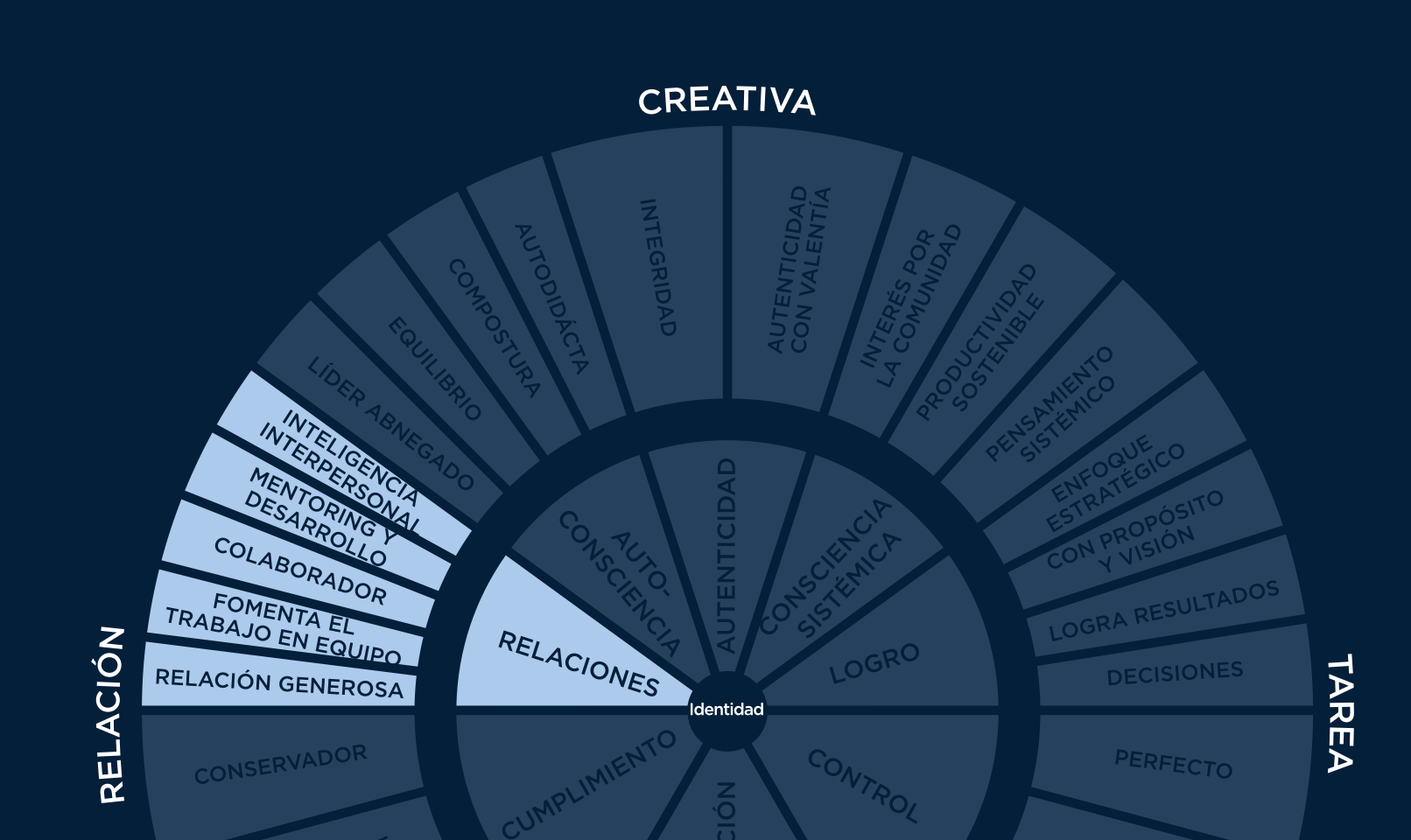
The creative competency of Caring Connection measures a leader's interest and ability to form warm, close, and genuine relationships. This closeness doesn't seek approval or aim to please, but rather stems from a creative orientation in the leader where warmth is a natural expression of their being.
Why is it fundamental for leadership?
This leadership capability is key both for team wellbeing and for organizational growth and results achievement. We can see this through the following indicators:
- Performance and synergy: High-performing groups are typically distinguished by members who care about one another; furthermore, we know that people are more efficient and committed when relationships are affectionate.
- Correlation with success: Caring connection is strongly correlated with leadership effectiveness (with coefficients up to 0.85 according to studies conducted by Leadership Circle EMEA) and with positive business performance indicators.
- Stress reduction: High-quality relationships act as a stress buffer, promoting wellbeing within the organization.
- Talent development: Under this type of leadership, people tend to grow because they feel accepted and valued, allowing them to take more risks and thereby improve without fear of judgment.
How can we develop this capability?
There are certain behaviors and ways of understanding relationships that allow us to move from reactive leadership to more conscious and creative leadership. Below we describe some of them:
- Working to transform our internal assumptions: Leaders must adopt empowering beliefs, such as understanding that "developing people is good for business" and that their personal worth doesn't depend on others' approval.
- Working on vulnerability: This involves being willing to share strengths, weaknesses, hopes, and fears, which invites others to do the same and connect from their own humanity.
- Developing Interpersonal Intelligence: This is the ability to listen for deep understanding, managing conflict in a way that makes the person feel supported even when the feedback is difficult.
- Moving beyond "Complying": Sometimes, without realizing it, we use closeness to "please" and avoid risks (Complying/Pleasing). Self-development consists of being capable of relational sensitivity, but focusing it toward serving a shared vision and results that matter, acting with one's own voice and honesty.
- Ability to admit mistakes: Acknowledging personal errors is one of the most direct expressions of this competency, as it removes the "mask" of perfection and generates trust.
In conclusion, this capability allows us to face challenges and people from a place of support and courage, attacking problems but never individuals.
Did this resonate?
If this connects with something you're working on, let's talk.
30 minutes by video call. No commitment. You'll know if I can help and, if I can't, I'll tell you who can.
Book a conversation →