Archetypes: "The Shield" - Why the Best Leaders May Be Closest to Burnout
Some time ago I was working on a fascinating case involving a senior leader—let's call her "Sara"—who was navigating a high-stakes transition.
Sara arrived at the session "bracing for impact." She described herself as going through what she considered her "worst leadership phase"; she said she felt scattered, indecisive, and overwhelmed by the demands of her role on top of those of a growing family. She came in expecting that her The Leadership Circle 360 assessment would confirm her worst fears.
However, when we opened the report, the data was shocking.
Compared to a global normative group of over 200,000 leaders, Sara's effectiveness ranked in the top 15%. Her team saw nothing of a burned-out, failing leader. They saw a visionary mentor who created deep psychological safety. They saw a rock.
This discrepancy highlights a dangerous and common archetype in modern leadership: I call it "the shield."
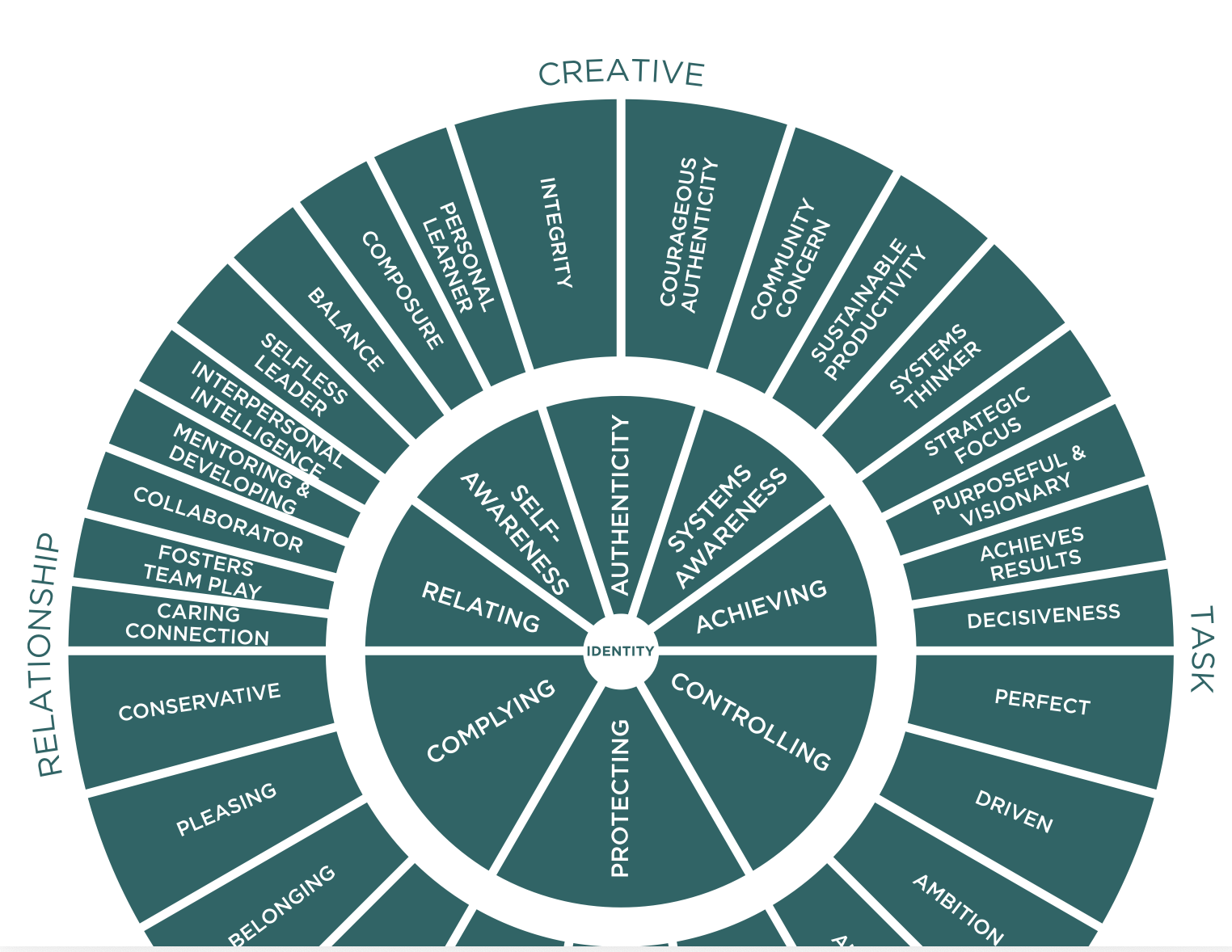
Sara's profile revealed a classic "Creative" leadership style: high in relationship building, mentoring, and integrity. But lurking beneath those superpowers was a critical risk factor: a combination of high scores in "over-striving" and "Perfectionism" on the reactive side, paired with dangerously low scores in "Balance."
Without realizing it, Sara had unconsciously decided that her value as a leader came from her ability to absorb stress. She acted as a "shield" for her team. When organizational chaos, understaffing, or strategic ambiguity rained down from above, Sara caught it all. She filtered the toxicity, organized the chaos, and presented her team with a calm, manageable environment.
The result was that her team thrived. They felt protected and cared for. But Sara was slowly burning out. This tends to happen when a leader believes their job is to prevent their team from feeling any organizational pain; they become the bottleneck for all the stress. These leaders work double, as they do their own work plus everyone else's emotional processing.
One of the most revealing findings from working with Sara was the split in perception between her direct reports and her own bosses.
- With her team: Sara was open, vulnerable, and deeply connected. She let her guard down.
- With her bosses: She was perceived as "distant," "too operational," and lacking in authenticity.
This was happening because Sara was "armoring up." Like many high performers, she believed she couldn't show weakness to senior leadership. She thought the way to demonstrate her competence was by carrying her struggle in silence.
The irony is tragic. By hiding her stress and trying to appear "perfect" and "in control" to her superiors, she didn't come across as competent; she came across as closed off. Her bosses couldn't see the great work she was doing to protect the team; they only saw someone distant and buried in operational details. The very armor she wore to protect her reputation was, in fact, damaging it.
For leaders like Sara, the way forward isn't to "do more" or "work harder." The solution for them is counterintuitive and usually consists of doing less.
For this type of leader, an effective strategy involves working on three fronts. With Sara we did the following:
- Lower the shield (a bit): You don't have to protect your team from everything. It's healthy for a team to feel part of reality. It builds their resilience and helps them understand the "why" behind difficult decisions.
- Dismantle the armor with bosses: Vulnerability isn't weakness; it's a strategic asset. If Sara told her boss: "I'm carrying a lot of weight right now to protect the team and I need help prioritizing," she'd likely receive respect, not judgment.
- Redefine value: Sara's value doesn't come from her suffering. It comes from her wisdom, her vision, and her presence. She brings value simply by being in the room, not by doing everyone's work.
If you're a leader who feels like you're constantly failing despite having a team that adores you, take your temperature. You might be acting as a heat shield. And while it's a noble instinct, it's not a sustainable strategy.
Did this resonate?
If this connects with something you're working on, let's talk.
30 minutes by video call. No commitment. You'll know if I can help and, if I can't, I'll tell you who can.
Book a conversation →